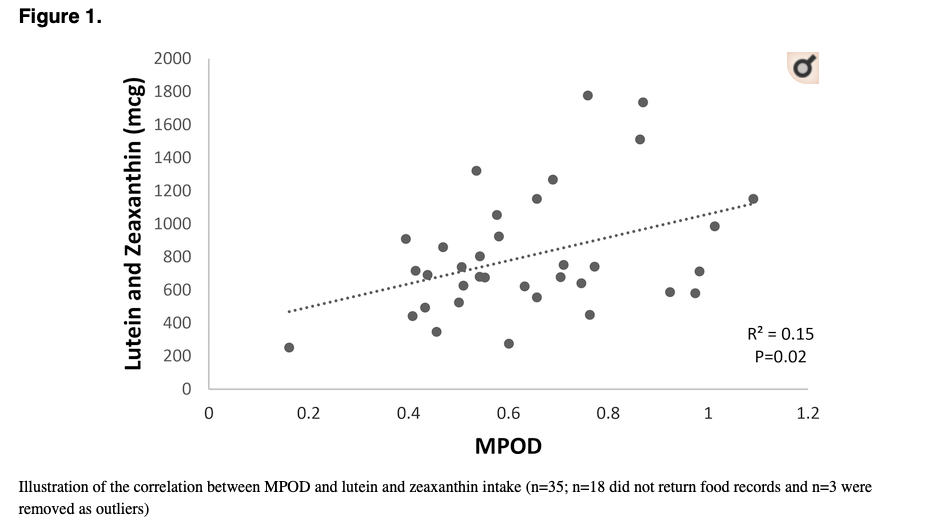
Dr. Fishman comment: 2 interesting take aways- the use of MPOD to track diet and how brain Lutein may be important for cognitive achievement . “This is the first study to demonstrate that retinal L and Z, measured as MPOD, is positively related to academic achievement in children”
Published in : Nutr Neurosci. 2018 Nov;21(9):632-640. Authors: Barnett SM1, Khan NA2,3,4, Walk AM2, Raine LB5, Moulton C6, Cohen NJ7,8,9, Kramer AF5,8, Hammond BR Jr10, Renzi-Hammond L10, Hillman CH5,11.
Abstract
OBJECTIVE:
Macular pigment optical density (MPOD) – a non-invasive indicator of retinal xanthophylls and correlate of brain lutein – has been associated with superior cognitive function among adult populations. Given that lutein accumulation in the brain occurs in early life, it is possible that the cognitive implications of greater MPOD may be evident in childhood.
METHODS:
Participants aged 8-9 years (n = 56) completed MPOD measurements via heterochromatic flicker photometry. Academic performance was assessed using the Kaufman Test of Academic and Educational Achievement II (KTEA). Habitual dietary intake of L and Z was measured among a subsample of participants (n = 35) using averaged 3-day food records. Stepwise hierarchical regression models were developed to determine the relationship between MPOD and academic achievement tests, following the adjustment of key covariates including sex, aerobic fitness, body composition, and intelligence quotient (IQ).
RESULTS:
The regression analyses revealed that MPOD improved the model, beyond the covariates, for overall academic achievement (ΔR2 = 0.10, P < 0.01), mathematics (ΔR2 = 0.07, P = 0.02), and written language composite standard scores (ΔR2 = 0.15, P < 0.01).
DISCUSSION:
This is the first study to demonstrate that retinal L and Z, measured as MPOD, is positively related to academic achievement in children, even after accounting for the robust effects of IQ and other demographic factors. These findings extend the positive associations observed between MPOD and cognitive abilities to a pediatric population. Trail registration: The Fitness Improves Thinking in Kids 2 (FITKids2) trial was registered at http://www.clinicaltrials.gov as NCT01619826.